

? | Home page | Tutorial | Recording

I prefer to record them last but there are no rules. If you prefer to record them first, then do so.
To record vocals, make sure the place is quiet, shut the door, tell the people who live with you to be quiet, and do not record while your neighbor is drilling holes through his kitchen walls! Also, turn off your monitors and use a headset instead to avoid recording the playback with your microphone.
Condenser or dynamic microphones?
Dynamic microphones are solid, they don' need a power source, they can take heavy acoustic pressure (like a kick drum or a saxophone) and they are not too expensive. They are also less sensitive to surrounding noises than condenser microphones. The cons are they lack clarity in the high range, which renders takes less clear and defined than with condenser microphones. They can be used with Jack or XLR plugs.
Condenser microphones are much more responsive and accurate. Their high sensitivity is double-edged, because they will capture any noise when recording. The fans of your PC are noisy? Chances are this noise will be recorded. Sound comes out of your headset? It will be recorded by your condenser microphone. Children are loudly playing outside? You might get that too. However, some condenser microphones are called "cardioid", or "hyper cardioid", and they only record what comes from a specific direction, ignoring (more or less) other sound sources from other directions. On the contrary, omnidirectional microphones record what comes from anywhere. Not ideal for a home studio. Condenser microphones are also more fragile (don't knock them) and must be powered through a "phantom power", whose standard is 48 volts. This kind of power is either present on your audio interface and can be turned on and off with a button, or it will require the use of an external phantom power source that you will then connect to your audio interface. You have to use 3-pin XLR plugs that carry the phantom power current. Finally, condenser microphones are usually rather expensive, some of them cost several thousand euros (or dollars, or pounds), but only professional studios or rich amateurs can afford those. On the plus side, the sound you get with a condenser microphone will have the best quality.
Be cautious though, a good dynamic microphone is worth better than a bad condenser microphone. No big secret here, for microphones like for anything else, very low prices are rarely synonymous with good quality.
A few known and renowned microphone brands: AKG, Milab, Neumann, Rode, Sennheiser, Shure...
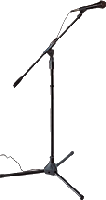
Some pieces of advice: buy a microphone stand and a pop filter (you can also make one yourself with wire and a piece of tights from your wife / girlfriend / mother / daughter / neighbor). The stand will prevent you from manually holding your microphone and thus produce handling noises. As for the pop filter, it prevents the air to hit the microphone and produce unwanted blowing sounds when you pronounce some letters such as "p" or "b".
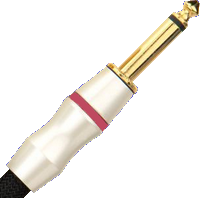
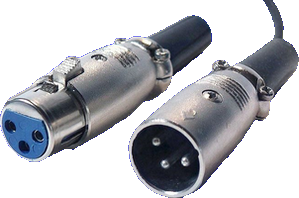
Jack plug (left) and XLR (right)


No need to go on and on forever, recording is rather easy. As long as you pay attention to your recording levels and take care over your takes, you should get a satisfying result, good enough to finalize the song
Messages page # 1 2 3 4 5 6 7 8 9 10 11 12 13 14 15 16 17 18 19 20 21 22 23 24 25 26 27 28 29 30 31 32 33 34 35

Jammin n' Rollin
le 27/10/2021 à 08h28
Hi Grebz, New to your page and found it by error and a great error it was! I am new to all this home recording and I never thought it was going to be this overwhelming... Lots of good info here, so thank you!!
Anonyme
le 21/09/2021 à 19h19
Juste pour te remercier, ton site est super : Une mine d'infos, et un des rares endroits (le seul ?) où on peut encore trouver certains vieux plugins :))
bourguiba24
le 17/05/2021 à 19h18
Bonjour,
je voudrais utiliser uniquement ma voix et tout les bruits envisageables afin de générer ce que j'appellerais "la pulsation" de ma composition.
Existe t'il des logiciels (et peut être tous en sont capable) qui aprés enregistrement d'un son se cale sur le dit son pour enregistrer le motif.
Ma formation d'origine c'est la batterie et donc j'aimerais pouvoir improviser vocalement (ou en tapant du pied aussi par exemple) des motifs et qu'ils soient ainsi reconnus par le logiciel avec un microphone.
j'espére que ma question est compréhensible !
Vous avez compris que je suis assez ignare en MAO ... juste chez moi un petit séquenceur autonome pour m'accompagner à la guitare !
Merci par avance
Gib
le 28/04/2021 à 20h35
Any way to make one of these be a perfect fit for a Chuck Shuldiner tone??
* * * * * * * * * * * * * * * *
Honestly, I have no idea. It's the first time I even hear about Chuck Shuldiner. But here's a webpage referencing his gear:
https://equipboard.com/pros/chuck-schuldiner
You could try the free amp Emissary, maybe?
Grebz
Sean
le 27/04/2021 à 16h44
Hello from the USA!
I'm writing you today because I need help with the LE456.
I've been using it for years now and I've created a very specific tone for my songs that I'd like to keep using. I recently upgraded from an Intel Macbook Pro to an Mac Mini with an M1 chip.I use Logic Pro X and it's a 64 bit system.
I put the .component files into my component folder and validated the plugin via the plugin-manager in logic. I also "Allowed" the plugin via the System and Security tab in Mac settings. It's still not coming up in my sub menu so I can put it on my channel strip. Is there any way to get it working with the M1 chips? I love this site and appreciate the work you do <3 Thank you!
* * * * * * * * * * * * * * * *
Hello Sean,
Thanks for visiting my website!
I don’t have good news… I’m a PC user, so I have no idea how things work on a Mac.
Furthermore, I know that the new M1 model has a very different CPU than the older Mac Intel CPUs, and it requires that software be updated to fully work. I also know that Rosetta can supposedly « translate » older programs, but does this include plugins ? I’m not sure about that. I’ve seen announcements from plugin manufacturers informing their users that their plugins were updated and M1-compliant, which probably means it’s a necessity to do so. Unfortunately, the guy behind the Lepou plugins stopped his activity and no longer updates them. So if it doesn’t work now, chances are it never will.
Unless there’s a magic trick I don’t know about.
Grebz