

? | Home page | Tutorial | Recording

I prefer to record them last but there are no rules. If you prefer to record them first, then do so.
To record vocals, make sure the place is quiet, shut the door, tell the people who live with you to be quiet, and do not record while your neighbor is drilling holes through his kitchen walls! Also, turn off your monitors and use a headset instead to avoid recording the playback with your microphone.
Condenser or dynamic microphones?
Dynamic microphones are solid, they don' need a power source, they can take heavy acoustic pressure (like a kick drum or a saxophone) and they are not too expensive. They are also less sensitive to surrounding noises than condenser microphones. The cons are they lack clarity in the high range, which renders takes less clear and defined than with condenser microphones. They can be used with Jack or XLR plugs.
Condenser microphones are much more responsive and accurate. Their high sensitivity is double-edged, because they will capture any noise when recording. The fans of your PC are noisy? Chances are this noise will be recorded. Sound comes out of your headset? It will be recorded by your condenser microphone. Children are loudly playing outside? You might get that too. However, some condenser microphones are called "cardioid", or "hyper cardioid", and they only record what comes from a specific direction, ignoring (more or less) other sound sources from other directions. On the contrary, omnidirectional microphones record what comes from anywhere. Not ideal for a home studio. Condenser microphones are also more fragile (don't knock them) and must be powered through a "phantom power", whose standard is 48 volts. This kind of power is either present on your audio interface and can be turned on and off with a button, or it will require the use of an external phantom power source that you will then connect to your audio interface. You have to use 3-pin XLR plugs that carry the phantom power current. Finally, condenser microphones are usually rather expensive, some of them cost several thousand euros (or dollars, or pounds), but only professional studios or rich amateurs can afford those. On the plus side, the sound you get with a condenser microphone will have the best quality.
Be cautious though, a good dynamic microphone is worth better than a bad condenser microphone. No big secret here, for microphones like for anything else, very low prices are rarely synonymous with good quality.
A few known and renowned microphone brands: AKG, Milab, Neumann, Rode, Sennheiser, Shure...
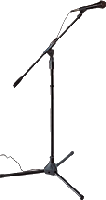
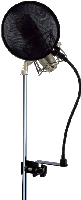
Some pieces of advice: buy a microphone stand and a pop filter (you can also make one yourself with wire and a piece of tights from your wife / girlfriend / mother / daughter / neighbor). The stand will prevent you from manually holding your microphone and thus produce handling noises. As for the pop filter, it prevents the air to hit the microphone and produce unwanted blowing sounds when you pronounce some letters such as "p" or "b".
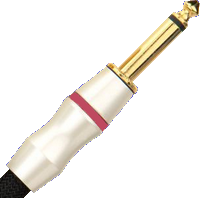
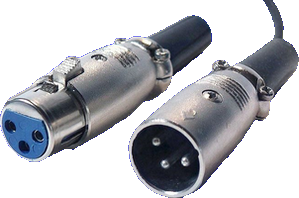
Jack plug (left) and XLR (right)

No need to go on and on forever, recording is rather easy. As long as you pay attention to your recording levels and take care over your takes, you should get a satisfying result, good enough to finalize the song
Messages page # 1 2 3 4 5 6 7 8 9 10 11 12 13 14 15 16 17 18 19 20 21 22 23 24 25 26 27 28 29 30 31 32 33 34 35

Arcio
le 10/09/2020 à 09h44
This website is absolutely phenomenal. The work you did is outstanding. Are you okay to help obtaining me the specific tones in exchange for donations?
igloox
le 31/08/2020 à 23h10
Bonjour,
j'aurais aimé savoir si la qualité de la carte son est primordiale pour avoir une bonne simu HP. En effet, à réglages équivalent, je n'arrive pas à avoir le même rendu avec le plugin WOS de chez two notes et le Torpedo CAB M qui utilise pourtant les mêmes algos. Merci (et bravo pour le site)
youraty
le 17/08/2020 à 13h49
Bonjour,
Pour répondre à la question de Pranasonic, les fichiers fxp sont à charger par ton hôte. Dans Reaper par exemple, il y a une croix au niveau du VST avec l'option "importer fxp" et ça charge tous les paramètres du VST.
Pour Grebz, vraiment super site ! Merci ! Les explications sont top, les comparatifs de sons vraiment intéressants.
Je me rends compte que depuis amplitube 3, il y a eu du progrès. Perso, je suis sous Linux et tous les simulateurs d'ampli ne fonctionnent pas, mais je vais creuser. Concernant les IR et chargeurs d'impulsions, je me suis couché moins bête après t'avoir lu. Dommage que le Cab2 de Poulin ne fonctionne pas avec moi. Je vois bien la charge CPU augmenter, mais aucun son ne sort si je le mets sur On. J'ai vu sur le net que d'autres ont ce souci, mais pas de réponses.
Pranasonic
le 13/05/2020 à 08h36
Salut, je ne sais pas comment appliquer les preset (*.fxp) aux amplis. Je ne vois nullepart une commande pour les charger sur l'ampli? Merci d'avance pour votre aide.
Lostin70s
le 01/05/2020 à 08h30
Bonjour, j’adore ton site c’est une super référence de sources Merci !
Dans la liste des simus d’amplis vst je ne vois pas de test sur le tonedeluxe v2, je t’invite à le tester c’est du made in France 😀 (www.lostin70s.com)
Julien