

? | Home page | Tutorial | Recording

I prefer to record them last but there are no rules. If you prefer to record them first, then do so.
To record vocals, make sure the place is quiet, shut the door, tell the people who live with you to be quiet, and do not record while your neighbor is drilling holes through his kitchen walls! Also, turn off your monitors and use a headset instead to avoid recording the playback with your microphone.
Condenser or dynamic microphones?
Dynamic microphones are solid, they don' need a power source, they can take heavy acoustic pressure (like a kick drum or a saxophone) and they are not too expensive. They are also less sensitive to surrounding noises than condenser microphones. The cons are they lack clarity in the high range, which renders takes less clear and defined than with condenser microphones. They can be used with Jack or XLR plugs.
Condenser microphones are much more responsive and accurate. Their high sensitivity is double-edged, because they will capture any noise when recording. The fans of your PC are noisy? Chances are this noise will be recorded. Sound comes out of your headset? It will be recorded by your condenser microphone. Children are loudly playing outside? You might get that too. However, some condenser microphones are called "cardioid", or "hyper cardioid", and they only record what comes from a specific direction, ignoring (more or less) other sound sources from other directions. On the contrary, omnidirectional microphones record what comes from anywhere. Not ideal for a home studio. Condenser microphones are also more fragile (don't knock them) and must be powered through a "phantom power", whose standard is 48 volts. This kind of power is either present on your audio interface and can be turned on and off with a button, or it will require the use of an external phantom power source that you will then connect to your audio interface. You have to use 3-pin XLR plugs that carry the phantom power current. Finally, condenser microphones are usually rather expensive, some of them cost several thousand euros (or dollars, or pounds), but only professional studios or rich amateurs can afford those. On the plus side, the sound you get with a condenser microphone will have the best quality.
Be cautious though, a good dynamic microphone is worth better than a bad condenser microphone. No big secret here, for microphones like for anything else, very low prices are rarely synonymous with good quality.
A few known and renowned microphone brands: AKG, Milab, Neumann, Rode, Sennheiser, Shure...
Some pieces of advice: buy a microphone stand and a pop filter (you can also make one yourself with wire and a piece of tights from your wife / girlfriend / mother / daughter / neighbor). The stand will prevent you from manually holding your microphone and thus produce handling noises. As for the pop filter, it prevents the air to hit the microphone and produce unwanted blowing sounds when you pronounce some letters such as "p" or "b".
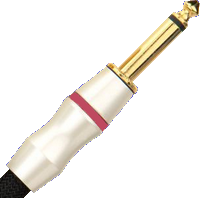
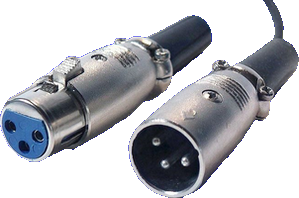
Jack plug (left) and XLR (right)
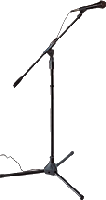
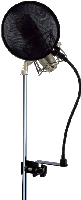

No need to go on and on forever, recording is rather easy. As long as you pay attention to your recording levels and take care over your takes, you should get a satisfying result, good enough to finalize the song
Messages page # 1 2 3 4 5 6 7 8 9 10 11 12 13 14 15 16 17 18 19 20 21 22 23 24 25 26 27 28 29 30 31 32 33 34 35

Stanman
le 16/04/2019 à 06h56
Just wanted to thank you for your time organizing this. It took me days to compile all of these in the past! I am switching to a new workstation. This will be very handy.
* * * * * * * * * * * * * * * *
You're welcome. I'm sorry to say that I don't have much time anymore to update my website, and some information are getting a bit old. Some day, I'll make new tutorials about mixing a song, with better techniques than currently available at the moment, but they're still valid to some extent. Thanks for your support!
alessandrolima
le 31/01/2019 à 23h24
Dude, thanks a lot for this tutorial. It really helped me a lot. God bless you!
slashburn
le 02/12/2018 à 19h53
Bonjour,
Sur le "jcm 800 mercurial", quelle différence entre la 12ax7eh et la 12ax7rsd ?
Je trouve la rsd plus "grasse" et plus disto, votre avis ?
* * * * * * * * * * * * * * * *
Bonjour,
Effectivement, comme ça simule 2 variantes d'une lampe 12ax7, le son change un peu entre les deux, ce qui permet d'étendre les possibilités du simulateur.
La RSD est un peu plus pêchue et un peu plus brillante, alors que la EH met plus les basses en avant.
À choisir en fonction de ce qu'on cherche comme type de son.
Grebz
Manouzot
le 07/08/2018 à 21h58
Salut !
Tout d'abord UN GRAND MERCI pour ton site et tes plugins. Sincèrement, c'est top !
Je suis sur Mac : j'ai téléchargé ignite_amps_nadir_1_0_2_mac et les amp Mac AU.
Bien mis dans le répertoire de mes plugins et components et aucun n'apparaît dans Logic Pro X ?
Quelqu'un sait pourquoi ?
Merci pour l'aide
patvan
le 27/06/2018 à 12h50
Hi, I just stumbled on your website. Very impressed I must say. I'm planning to buy TSE X50 also. I'm currently owning a squire Strat and was wondering how I would get a warm jazz tone out of the guitar. Any idea what settings on the TSE X50 could work ? A tone like here : https://www.youtube.com/watch?v=nkW8gKsZiVk
Cheers,
Patrick