

? | Home page | Tutorial | Recording

I prefer to record them last but there are no rules. If you prefer to record them first, then do so.
To record vocals, make sure the place is quiet, shut the door, tell the people who live with you to be quiet, and do not record while your neighbor is drilling holes through his kitchen walls! Also, turn off your monitors and use a headset instead to avoid recording the playback with your microphone.
Condenser or dynamic microphones?
Dynamic microphones are solid, they don' need a power source, they can take heavy acoustic pressure (like a kick drum or a saxophone) and they are not too expensive. They are also less sensitive to surrounding noises than condenser microphones. The cons are they lack clarity in the high range, which renders takes less clear and defined than with condenser microphones. They can be used with Jack or XLR plugs.
Condenser microphones are much more responsive and accurate. Their high sensitivity is double-edged, because they will capture any noise when recording. The fans of your PC are noisy? Chances are this noise will be recorded. Sound comes out of your headset? It will be recorded by your condenser microphone. Children are loudly playing outside? You might get that too. However, some condenser microphones are called "cardioid", or "hyper cardioid", and they only record what comes from a specific direction, ignoring (more or less) other sound sources from other directions. On the contrary, omnidirectional microphones record what comes from anywhere. Not ideal for a home studio. Condenser microphones are also more fragile (don't knock them) and must be powered through a "phantom power", whose standard is 48 volts. This kind of power is either present on your audio interface and can be turned on and off with a button, or it will require the use of an external phantom power source that you will then connect to your audio interface. You have to use 3-pin XLR plugs that carry the phantom power current. Finally, condenser microphones are usually rather expensive, some of them cost several thousand euros (or dollars, or pounds), but only professional studios or rich amateurs can afford those. On the plus side, the sound you get with a condenser microphone will have the best quality.
Be cautious though, a good dynamic microphone is worth better than a bad condenser microphone. No big secret here, for microphones like for anything else, very low prices are rarely synonymous with good quality.
A few known and renowned microphone brands: AKG, Milab, Neumann, Rode, Sennheiser, Shure...
Some pieces of advice: buy a microphone stand and a pop filter (you can also make one yourself with wire and a piece of tights from your wife / girlfriend / mother / daughter / neighbor). The stand will prevent you from manually holding your microphone and thus produce handling noises. As for the pop filter, it prevents the air to hit the microphone and produce unwanted blowing sounds when you pronounce some letters such as "p" or "b".
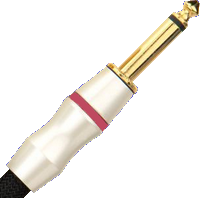
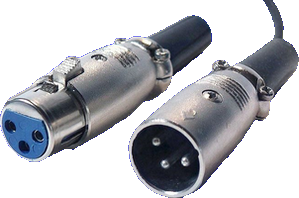
Jack plug (left) and XLR (right)
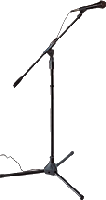
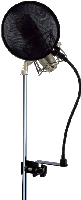

No need to go on and on forever, recording is rather easy. As long as you pay attention to your recording levels and take care over your takes, you should get a satisfying result, good enough to finalize the song
Messages page # 1 2 3 4 5 6 7 8 9 10 11 12 13 14 15 16 17 18 19 20 21 22 23 24 25 26 27 28 29 30 31 32 33 34 35

Reglis
le 17/03/2010 à 16h32
Bonjour et bravo pour ton site.
Pour ma part je suis un petit débutant de 60 ans et souhaite me lancer dans la MAO.
Ayant un clavier Yamaha Clavinova, je souhaiterais le relier à mon PC pour pouvoir m'enregistrer en Midi, peux-tu me conseiller une carte son pour un PC portable.
Dans un deuxième temps, je souhaiterais avoir ton avis sur un logiciel qui me permettrait d'envoyer des banques son sur mon clavier, comme un expander.
Merci pour ta réponse et longue vie à ton site.
* * * * * * * * * * * * * * * *
<em>Bonjour,
Merci des encouragements. Honnêtement, en MIDI, je ne suis pas très calé, alors je ne voudrais pas dire de bêtises.
Pour des expandeurs logiciels, je te conseille d'aller voir <a href="http://fr.audiofanzine.com/expandeur-virtuel/" target="_blank">ici sur AudioFanzine</a>.
Pour enregistrer uniquement du MIDI, sans doute une simple interface MIDI suffira-t-elle. <a href="http://fr.audiofanzine.com/interface-midi/" target="_blank">Voir ici</a>. Ou bien n'importe quelle interface audio qui dispose aussi d'une prise MIDI, ce qui est le cas pour nombre d'entre elles. <a href="http://fr.audiofanzine.com/carte-son-externe/" target="_blank">Voir ici</a>.
A priori, il est plus simple d'opter pour une interface à prise USB que Firewire, à moins que ton portable ne soit doté d'une prise Firewire, ce qui n'est pas si courant que ça sur portable. En plus, les interfaces audio USB sont généralement alimentées par le portable, donc pas besoin de les brancher sur le secteur, au contraire de la majorité des interfaces Firewire (en fait, des prises mini-firewire) présentes sur les portables.
Désolé de ne pouvoir t'aider plus directement, je ne suis pas spécialiste...
Grebz</em>
Fifours
le 07/03/2010 à 21h45
Salut,
Merci beaucoup pour tes conseils de matos, mais je voudrais savoir si t'as des conseils en amplis casque. Connais-tu ceux de la marque SPL, valent-ils leur prix (excessif je trouve sur le site Thomann) ?
A++, Fifours
* * * * * * * * * * * * * * * * * * *
<em>Merci de ton message sur mon site.
Je ne suis pas très calé en amplis casque, mais ceux que j'ai vus de chez SPL me paraissent carrément prohibitifs !!!
Je ne sais pas ce que tu attends comme qualité ni ce que tu comptes en faire, mais <a href="http://fr.audiofanzine.com/ampli-casque/" target="_blank">va voir chez Audiofanzine sur la page des amplis casque</a> et fais-toi une idée des différents modèles et avis postés par les utilisateurs.
Apparemment, celui-ci est bien noté : <a href="http://fr.audiofanzine.com/ampli-casque/presonus/HP-4/avis/" target="_blank">Presonus HP-4</a>.
Je conseille également d'<a href="http://www.dv247.fr/search/0/0/ProductQuantity/Descending/headphone+amplifier/1/" target="_blank">aller faire un tour chez DV247</a> également, magasin anglais avec des tarifs intéressants (mais ça dépend des marques).
Là, c'est la page des amplis casque, mais leur site contient pas mal de choix.
Moi j'ai un Behringer HA400 tout ce qu'il y a de plus simple, on peut y brancher 4 casques.
Voir ici sur Audiofanzine : <a href="http://fr.audiofanzine.com/ampli-casque/behringer/MICROAMP-HA400/avis/" target="_blank">Behringer HA400</a>.
Tout ce que je peux en dire, c'est qu'il est très transparent et ne m'a jamais posé de souci, pour un prix de moins de 30 euros.
En revanche, c'est juste des entrées et un bouton de volume... Pas d'options, de réglages ou quoi que ce soit, c'est sans peut-être pas ce que tu recherches, mais c'est très pratique pour écouter une prise à plusieurs sans mettre le son sur les enceintes quand il faut du silence.
Finalement, moi il me sert à ça cet appareil : un multiplicateur de prises casque, sans sophistication et peut-être pas la meilleure qualité de son au monde, mais si je veux mixer au casque, je branche directement mon casque sur mon interface audio...
Grebz
</em>
Grebz
le 22/02/2010 à 15h28
Bienvenue dans mon home studio !